
How Many Sight Words Should a Kindergartener Know
If you’re wondering how many sight words a kindergartener should know, you’re not alone. Many parents want to make sure their child is developing the reading skills they need for kindergarten and first grade.
Sight words are an important part of early reading because children encounter many of these common words again and again in books. Learning to recognize them quickly can help children read more smoothly, build confidence, and spend more energy understanding what they’re reading.
But exactly how many sight words should a kindergartener know?

The answer can vary depending on your child’s age, school, reading program, and individual development. In general, many kindergarten students work toward recognizing approximately 50–100 common sight words by the end of kindergarten, although expectations vary from one curriculum or school to another.
The most important goal isn’t simply reaching a certain number. It’s helping your child recognize words accurately, confidently, and automatically.
What Are Sight Words?
Sight words are common words that children are encouraged to recognize quickly when they see them.
Examples include:
- the
- a
- I
- is
- it
- in
- to
- and
- you
Some sight words don’t follow common phonics rules, which can make them more difficult for beginning readers to sound out.
Other frequently used words can be decoded using phonics but are still taught as high-frequency words because children encounter them so often.
This is why sight-word practice is often combined with phonics, letter-sound knowledge, vocabulary, and reading practice.
How Many Sight Words Should a Kindergartener Know?
There isn’t one universal number that every kindergartener must know.
A reasonable general goal is:
Beginning of Kindergarten
At the beginning of kindergarten, some children may recognize only a handful of sight words, while others may already know 20, 30, or more.
If your child is just beginning to learn sight words, don’t panic.
Start with a small group of highly useful words and focus on learning them well.
Middle of Kindergarten
By the middle of kindergarten, many children are working on recognizing a growing list of high-frequency words.
A child might know approximately 20–50 sight words, depending on the curriculum and how much reading practice they have had.
End of Kindergarten
By the end of kindergarten, many children are working toward recognizing approximately 50–100 sight words.
Some children will know fewer, while others may know significantly more.
Remember that these numbers are general benchmarks, not a test your child has to pass.
Children develop reading skills at different rates.
Does My Kindergartener Need to Know 100 Sight Words?
Not necessarily.
You may see kindergarten sight-word lists containing 50, 75, 100, or even more words. That doesn’t mean every child needs to memorize exactly the same number by the same date.
Instead of focusing only on the number, look at whether your child is making progress.
Ask yourself:
- Can my child recognize common words quickly?
- Is my child learning new words over time?
- Can my child use sight words while reading simple sentences?
- Is my child developing phonics skills?
- Can my child blend sounds together?
- Does my child understand what they are reading?
- Is my child’s confidence improving?
Reading is much more than memorizing a list of words.
The Most Important Kindergarten Sight Words
If you’re teaching sight words at home, you don’t have to introduce dozens of words at once.
Start with simple, frequently used words.
For example:
a, I, the, is, it, in, my, to, go, we, can, see, you, like, and
Once your child becomes comfortable with these words, gradually introduce additional words.
A smaller list that your child truly knows is much more useful than a huge list that your child guesses at.
How Many Sight Words Should You Teach at a Time?
For many young learners, 5–10 words at a time can be a manageable starting point.
You can introduce a few new words while continuing to review previously learned words.
For example:
Week 1
Week 2
Week 3
- I
- a
- the
- is
- it
- my
- can
- see
- go
- to
- we
- like
- you
- and
- in
Continue reviewing older words while adding new ones.
This approach gives your child repeated exposure without making sight-word practice feel overwhelming.
How Long Should You Practice Sight Words?
You don’t need a long study session.
For kindergarten children, 5–10 minutes of focused practice can be more effective than trying to spend 30–45 minutes memorizing words.
Try practicing sight words:
- Before reading a book
- During breakfast
- In the car
- While playing
- With flashcards
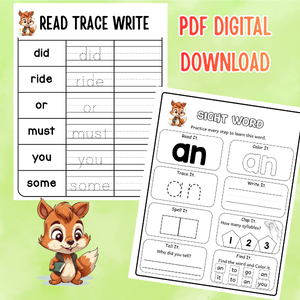
- Using printable worksheets
- During a scavenger hunt
- With magnetic letters
- By writing words on a whiteboard
- While reading simple sentences
The key is frequent, enjoyable repetition.
Fun Ways to Practice Kindergarten Sight Words
Sight-word practice doesn’t have to feel like schoolwork.
Sight Word Hunt
Write several sight words on pieces of paper and hide them around the room.
Have your child find each word and read it aloud.
Sight Word Memory
Make pairs of sight-word cards.
Place them face down and have your child turn over two cards at a time while trying to find matching words.
Sight Word Bingo
Create a simple bingo board using your child’s current sight words.
Call out a word and have your child find it on the board.
Write It in Different Ways
Have your child write the same sight word:
- With crayons
- With markers
- On a whiteboard
- With magnetic letters
- With sidewalk chalk
- With finger paint
Changing the activity can make repetition much more interesting.
Read Sight Words in Books
Don’t limit sight-word practice to worksheets.
Point out familiar words while reading books together.
Ask your child:
“Can you find the word ‘the’?”
Then celebrate when they find it.
This helps children understand that sight words aren’t just words on flashcards—they are words they will actually see while reading.
What If My Kindergartener Is Struggling With Sight Words?
If your child is having difficulty remembering sight words, don’t assume they aren’t capable of learning to read.
Some children simply need more repetition and a different approach.
Try these strategies:
Reduce the Number of Words
Instead of practicing 20 words, choose 3–5 words.
Master those words before adding more.
Use Repetition
Children often need to see and use a word many times before it becomes automatic.
Review previously learned words regularly.
Use Multiple Senses
Have your child see, say, hear, write, and build the word.
For example, with the word “the”, your child can:
- Look at the word.
- Say the word.
- Spell the letters.
- Trace the word.
- Write the word.
- Find the word in a book.
Put Words Into Sentences
Instead of only showing the word “can,” use it in a sentence:
“I can run.”
This gives your child context and helps them understand how the word works.
Keep Practice Positive
Avoid turning sight-word practice into a battle.
If your child becomes frustrated, take a break and try again later.
A few minutes of successful practice is better than a long session filled with frustration.

Sight Words and Phonics Should Work Together
One important thing parents should remember is that sight words aren’t a replacement for phonics.
Children need to learn how letters and sounds work together so they can decode unfamiliar words.
Sight-word practice and phonics can complement each other.
For example, when your child sees a sentence such as:
“I can see the cat.”
They can use sight-word knowledge to recognize familiar words such as I, can, see, and the, while using phonics skills to work through words they don’t immediately recognize.
This combination helps children become more independent readers.
Free Sight Word Practice for Your Kindergartener
If you’re looking for an easy way to get started, a printable sight-word pack can give you ready-to-use activities without requiring you to create everything yourself.
The Squeaky Squirrel Schoolhouse Free Sight Words Printable Pack is designed to help parents make sight-word practice simple, fun, and approachable at home.
You can use printable activities for quick practice sessions and then reinforce those words during everyday reading.
Want to Help Your Child Learn More Sight Words?
Once your child has mastered the first group of words, consistent practice can help build a much larger sight-word vocabulary.
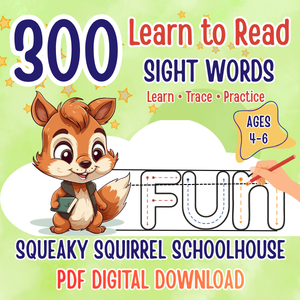
The 300 Learn to Read Sight Words resource from Squeaky Squirrel Schoolhouse gives families a larger collection of sight words to practice as children progress through early reading.
It can be used for:
- Kindergarten reading practice
- First-grade preparation
- Homeschool reading lessons
- After-school practice
- Independent practice
- Literacy centers
- Summer reading practice
- Extra reading support
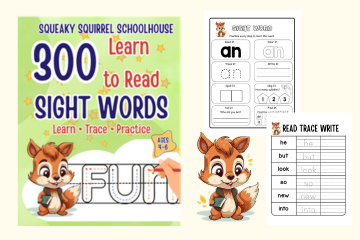
The goal isn’t to rush through all 300 words.
Instead, work through the words gradually and continue reviewing words your child has already learned.
Frequently Asked Questions About Kindergarten Sight Words
How many sight words should a 5-year-old know?
There is no single number that applies to every 5-year-old. Some children may know only a few sight words, while others may recognize dozens. Focus on steady progress rather than comparing your child with other children.
Should a kindergartener know 100 sight words?
Not necessarily. Some kindergarten programs may work toward 100 or more words, while others use a smaller list. The quality of your child's reading skills matters more than reaching an arbitrary number.
How can I teach sight words at home?
Keep practice short and consistent. Use flashcards, printable activities, games, books, writing activities, word hunts, and simple sentences.
How many sight words should a kindergartener know by the end of the year?
A common general goal is approximately 50–100 sight words by the end of kindergarten, although expectations vary by school, curriculum, and child.
What sight words should kindergarteners learn first?
Start with common, useful words such as I, a, the, is, it, my, in, to, go, can, see, we, you, and and.
What if my child keeps forgetting sight words?
That's normal for many beginning readers. Reduce the number of words you're practicing, increase repetition, use different activities, and regularly review previously learned words.
Final Thoughts: Focus on Progress, Not Perfection
So, how many sight words should a kindergartener know?
A helpful general target is around 50–100 sight words by the end of kindergarten, but there is no magic number that determines whether a child is a successful reader.
Every child learns differently.
Instead of worrying about whether your child knows exactly 50, 75, or 100 words, focus on helping them build their skills one word at a time.
Keep sight-word practice short, consistent, and fun. Combine sight words with phonics and daily reading, and celebrate your child’s progress along the way.
One word today can become a confident reader tomorrow.
Ready to Make Sight-Word Practice Easier?
Start with the Squeaky Squirrel Schoolhouse Free Sight Words Printable Pack, then continue building your child’s reading skills with the 300 Learn to Read Sight Words book and digital resources.
With consistent practice and plenty of encouragement, your little reader can build the sight-word recognition skills needed for kindergarten and beyond.
