
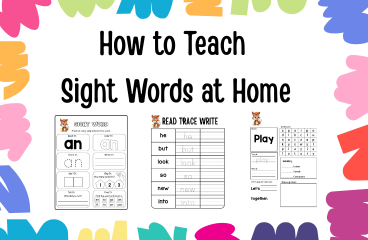
How to Teach Sight Words at Home
Teaching your child to read can feel overwhelming, especially when you’re not sure where to begin.
One simple place to start is with sight words.
Sight words are common words that children encounter frequently when reading. Helping children recognize these words can make reading practice easier and help them become more confident early readers.
The good news is that you don’t need an expensive curriculum or hours of daily lessons to practice sight words at home.
With a few simple activities, a consistent routine, and the right resources, you can turn sight word practice into a fun part of your child’s day.
And we’ve made it even easier with a FREE Sight Words Printable Pack you can download and use at home. Submit the form below and your Sight Words Printables will be sent to your email.
GET THE FREE SIGHT WORDS PRINTABLE PACK
What Are Sight Words?
Sight words are words that children are encouraged to recognize quickly when they see them.
Some common examples include:
the, and, is, it, in, to, you, my, we, can, see, go, a, I
Many of these words appear frequently in children’s books.
Some sight words can be sounded out using phonics, while others have spelling patterns that may not be as straightforward for beginning readers.
That’s why repeated exposure and practice can be helpful.
The goal is to help children become familiar with these frequently used words so they can recognize them more automatically while reading.
When Should You Start Teaching Sight Words?
There isn’t one perfect age for every child.
Many children begin learning common sight words during preschool, pre-kindergarten, and kindergarten, while others may begin later.
Rather than focusing on a specific age, pay attention to your child’s readiness.
Your child may be ready for simple sight word activities if they:
- Show interest in books
- Enjoy being read to
- Recognize some letters
- Know some letter sounds
- Can recognize their own name
- Enjoy word or letter games
- Are beginning to understand that letters represent sounds
Remember that children develop reading skills at different rates.
Sight word practice should be encouraging rather than stressful.
How to Teach Sight Words at Home
You don’t need to spend an hour every day teaching sight words.
In fact, short practice sessions can be easier for young children.
Try spending 5–10 minutes a day practicing a small number of words.
Here are some simple strategies you can use.
Start With a Few Sight Words
One of the biggest mistakes parents can make is introducing too many words at once.
Instead, begin with a small group.
For example:
the
and
is
it
my
Practice these words regularly before introducing additional words.
Once your child becomes comfortable with them, gradually add new words.
Say the Word Together
Write the word on a card or show it on a printable.
Ask your child:
“What word is this?”
If they don’t know it, say the word together.
Then have your child repeat it.
Don’t turn the activity into a test.
The goal is exposure and practice.
Use Sight Word Flashcards
Flashcards are a simple way to practice word recognition.
Show your child one word at a time.
For example:
THE
Ask your child to read it.
Then try:
AND
Then:
IS
Keep the activity short and upbeat.
You can even let your child hold the cards and “teach” you the words.
Turn Sight Words Into a Game
hildren often learn better when they are having fun.
Instead of simply asking your child to memorize words, turn practice into a game.
Try:
Sight Word Hunt
Write several sight words on pieces of paper and hide them around the room.
Have your child find each word and read it.
Sight Word Bingo
Create a simple bingo board using words your child is learning.
Call out a word and have your child find it.
Word Match
Create two cards for each sight word.
Mix them up and have your child find matching pairs.
Sight Word Treasure Hunt
Hide sight words around the house.
Every time your child finds one, they read the word.
These activities can make reading practice feel more like play.
Use Sight Word Printables
Printable activities are especially useful because they give children opportunities to see and practice words repeatedly.
You can use worksheets and printable activities for:
- Word recognition
- Matching
- Tracing
- Reading practice
- Writing practice
- Coloring activities
- Word searches
- Review activities
If you’re looking for an easy place to start, download our FREE Sight Words Printable Pack.
Get the Free Sight Words Printable Pack
DOWNLOAD YOUR FREE SIGHT WORDS PACK
Print the activities and use them as part of your child’s daily or weekly reading routine.
Submit below and they will sent directly to your email.
Practice Sight Words While Reading Books
One of the best ways to reinforce sight words is to find them in real books.
Choose a simple children’s book.

Before reading, pick one or two sight words your child knows.
Tell your child:
“Let’s see if we can find the word ‘the’ in our book.”
As you read together, have your child look for the word.
This helps children see that sight words aren’t just words on worksheets—they are words they actually use when reading.
Use Writing to Reinforce Sight Words
Reading and writing can work together.
After practicing a word, ask your child to write it.
For example:
can
Have your child:
- Trace the word
- Write the word
- Say the word
- Use the word in a sentence
You can also let your child write sight words with:
- Crayons
- Markers
- Colored pencils
- Chalk
- Magnetic letters
- Dry-erase markers
Changing the way your child practices can keep learning interesting.
Use Movement
Young children don’t always want to sit at a table.
That’s okay!
Add movement to sight word practice.
Write words on pieces of paper and place them on the floor.
Say:
“Find the word ‘my’!”
Have your child jump to the correct word.
You can also:
- Toss a beanbag onto a word
- Hop from word to word
- Run to the correct word
- Clap while spelling a word
- Make letters with your body
Movement can make practice more engaging for active learners.
Review Old Words Regularly
Don’t stop practicing a sight word just because your child got it right once.
Children benefit from repeated exposure.
Create a simple review routine.
For example:
Monday: Introduce 2 new words
Tuesday: Practice the new words
Wednesday: Review old + new words
Thursday: Play a sight word game
Friday: Read a book and look for the words
This keeps practice short and manageable.
Celebrate Small Wins
Learning to read takes time.
Your child may recognize a word one day and forget it the next.
That doesn’t mean they aren’t learning.
Celebrate progress.
Say things like:
“You remembered that word!”
“Great job finding the word!”
“You figured that one out!”
Positive encouragement can help children develop confidence and enjoy reading.
What If My Child Struggles With Sight Words?
Don’t panic.
Some children need more repetition than others.
If your child is struggling, try reducing the number of words you’re practicing.
Instead of practicing 10 words, try 2 or 3.
You can also change the activity.
If worksheets aren’t working, try a game.
If flashcards aren’t holding your child’s attention, try looking for sight words in a favorite book.
And remember that sight word instruction should be part of a broader approach to reading that can include phonics, decoding, vocabulary, listening, writing, and reading together.
How Long Should You Practice Sight Words?
For young children, shorter sessions are often easier to manage.
Try starting with:
5–10 minutes per day.
You don’t have to practice every word every day.
A simple routine might look like this:
Monday
Practice 3 sight words.
Tuesday
Review the same 3 words.
Wednesday
Play a sight word game.
Thursday
Practice the words using a printable.
Friday
Look for the words in a children’s book.
Consistency matters more than having long lessons.
Free Sight Words Printable Pack
Ready to make sight word practice easier?
We’ve created a FREE Sight Words Printable Pack that parents, teachers, and homeschool families can use to give children additional sight word practice.
It’s a simple way to add printable reading activities to your child’s learning routine.
Download Your FREE Sight Words Printable Pack
Submit below to GET THE FREE SIGHT WORDS PRINTABLE PACK
Print it, grab a pencil or crayons, and start practicing together!
Want More Sight Word Practice?
If your child is ready for more extensive sight word practice, check out the 300 Learn to Read Sight Words book from Squeaky Squirrel Schoolhouse.
The book provides children with additional opportunities to practice recognizing and learning common sight words.
It can be a helpful supplemental resource for:
- Parents
- Preschool families
- Kindergarten families
- Homeschoolers
- Early readers
- Teachers
- Children who need additional practice
Explore the 300 Learn to Read Sight Words Book
SHOP THE 300 LEARN TO READ SIGHT WORDS BOOK HERE
SHOP THE DIGITAL DOWNLOAD PDF HERE
Use the free printable pack as a starting point and the larger sight word resources for continued practice.
Make Reading Practice a Daily Habit
Teaching sight words at home doesn’t have to be complicated.
Start small.
Choose a few words.
Practice them for a few minutes.
Read books together.
Play games.
Use printable activities.
And celebrate your child’s progress along the way.
Most importantly, keep reading.
When children associate reading practice with encouragement, games, stories, and positive experiences, they are more likely to develop confidence and a love of learning.
Then continue building your child’s early reading skills with the 300 Learn to Read Sight Words book or PDF Digital Download Printables from Squeaky Squirrel Schoolhouse.
Frequently Asked Questions
What is the easiest way to teach sight words at home?
Start with a small number of common words and practice them regularly using flashcards, games, books, writing activities, and printable worksheets.
How many sight words should I teach at once?
Start with just a few words. Once your child is comfortable recognizing them, gradually introduce additional words.
How can I make sight word practice fun?
Try sight word hunts, matching games, bingo, movement games, coloring activities, and finding sight words in your child's favorite books.
Should I use sight word worksheets every day?
You can use printable activities regularly, but it's helpful to vary activities. Combine printables with books, games, writing, phonics, and conversation.
Can I teach sight words while homeschooling?
Yes. Sight word activities can easily be incorporated into a homeschool language arts or early reading routine.
Where can I find free sight word worksheets?
Squeaky Squirrel Schoolhouse offers a Free Sight Words Printable Pack that parents and educators can use for additional reading practice.
