10 Best Preschool Alphabet Learning Supplies for Kids
Discover 10 fun preschool alphabet learning supplies that help kids recognize letters, practice writing, and learn their ABCs through play.

Squeaky Squirrel Schoolhouse
Looking for a little learning adventure?
10 Best Preschool Alphabet Learning Supplies for Kids!
Learning the alphabet is one of the first big steps on your child’s journey toward reading and writing. But if you’ve ever tried to teach a preschooler to sit still and practice letters, you know that little learners usually learn best when they’re having fun!
7 Day School Readiness Challenge
Good News!
You don’t need an expensive classroom or a closet full of educational toys to help your child learn the ABCs. A few simple supplies can turn everyday play into meaningful learning opportunities.
At Squeaky Squirrel Schoolhouse
we believe learning should feel like an adventure. With colorful letters, hands-on activities, and plenty of encouragement, you can help your preschooler build alphabet skills one playful moment at a time.
Â
Whether you’re a parent, grandparent, homeschool family, or caregiver, here are 10 must-have supplies to make learning the alphabet fun at home.
Magnetic letters are a fantastic starting point for teaching the alphabet. Children can pick them up, move them around, sort them, and match them to letters on a board or refrigerator.
Why they’re helpful:
Help children become familiar with uppercase and lowercase letters.
Encourage letter matching and sorting.
Introduce the connection between letters and the sounds they represent.
Make learning interactive rather than worksheet-only.
Try this activity: Choose three magnetic letters and ask your child to find the letter you name. Once they get the hang of it, ask them to find the first letter in their name.
You can also place a few letters on a tray and ask your child to match them to letters on a printed alphabet chart.
What to look for: Choose sturdy, age-appropriate magnetic letters with secure magnets. Follow the manufacturer’s age guidance and supervise young children, especially toddlers, because loose magnets can pose a serious ingestion hazard.
Little learners love to make their mark! Washable markers and chunky crayons let children explore letters while developing the hand control they’ll eventually need for writing.
Coloring also creates a natural opportunity to talk about letters and their sounds.
Why they’re helpful:
Encourage fine motor development.
Make alphabet worksheets more engaging.
Help children practice holding and controlling a writing tool.
Give children an opportunity to express their creativity.
Try this activity: Write a large letter A on a sheet of paper. Ask your child to trace over it with a washable marker, then draw or color pictures of things that begin with A, such as apples and alligators.
Don’t worry if your child’s letter looks a little wobbly. At this age, exploration and practice matter more than perfect handwriting.
What to look for: Choose washable, age-appropriate art supplies labeled for children’s use. Supervise children and keep markers and crayons out of their mouths.
Browse our favorite washable markers, jumbo crayons, and beginner-friendly ABC books.
Tracing boards give children a hands-on way to explore the shapes of letters before they’re ready to write them independently.
Some boards feature grooves that guide a child’s finger or a stylus along the letter. Others use reusable surfaces that allow children to practice writing again and again.
Why they’re helpful:
Encourage children to notice the shapes of letters.
Provide repeated opportunities to practice letter formation.
Support hand-eye coordination and fine motor practice.
Offer a reusable alternative to disposable worksheets.
Try this activity: Introduce one letter at a time. Show your child the letter, say its name, and trace it slowly with your finger. Invite your child to trace the same letter while saying its name aloud.
For example: “This is the letter S. S says /s/, like squirrel!”
What to look for: Choose a board with clear, easy-to-follow letter paths and age-appropriate writing tools. Make sure the board matches the letter style your child is learning.
View our favorite preschool alphabet tracing boards and reusable letter-writing boards.
Alphabet flashcards are simple, portable, and surprisingly versatile. You can use them at the kitchen table, during quiet time, or while waiting for an appointment.
Picture-based flashcards are especially useful when they connect a letter with a familiar object.
Why they’re helpful:
Support letter recognition.
Help children connect letters with pictures and words.
Make it easy to practice a few letters at a time.
Work well for matching games and quick review sessions.
Try this activity: Show your child a card with the letter B and a picture of a ball. Say, “B is for ball. Can you find something else that starts with the /b/ sound?”
You can also place three cards on the table and ask your child to find a particular letter.
What to look for: Choose cards with large, easy-to-read letters, clear pictures, and both uppercase and lowercase letters if possible.
Browse our favorite preschool alphabet flashcards and picture-based ABC cards.
5. An Alphabet Chart or Poster
An alphabet chart provides a visual reference that children can return to throughout the day. Hang one near your child’s play area, reading corner, or learning table.
Over time, your preschooler may begin recognizing familiar letters simply by seeing them regularly.
Why it’s helpful:
Provides repeated exposure to the alphabet.
Makes it easy to review letters during everyday activities.
Helps children connect uppercase and lowercase letters.
Encourages independent exploration.
Try this activity: Choose a “letter of the day.” Point to it on the chart, say its name, and find something nearby that begins with the same sound.
If today’s letter is M, you might look for a mug, a marker, or a favorite stuffed mouse.
What to look for: Choose a chart with uncluttered lettering, recognizable pictures, and a clear uppercase and lowercase alphabet.
Printable alphabet worksheets are an affordable way to give your child extra practice without buying a new workbook every time they need an activity.
You can print the pages you need, choose a few letters to focus on, and return to the same activity when your child is ready for more practice.
Â
Why they’re helpful:
Provide structured letter-recognition and tracing practice.
Let you tailor activities to your child’s learning level.
Combine writing, coloring, and letter matching.
Make it easy to create a simple preschool learning routine.
Try this activity: Print a page featuring one letter. First, ask your child to point to the letter and say its name. Next, trace it together. Finish by coloring a picture that begins with the same sound.
Â
Keep the session short and celebrate the effort rather than expecting your child to complete every line perfectly.
Squeaky's Adventures

Subscribe & Follow
ABC Activity
Learning the alphabet is one of the first big adventures in a child’s…
Trending
What Are Sight Words?
A Parent’s Guide to Helping Kids Learn to Read…Continue Reading…
50 Screen-Free Learning Activities Kids Love
In today’s digital world, children spend more time than ever looking at tablets, phones, televisions, and computers. While technology certainly has…Continue Reading…

7. Play-Dough for Building Letters
Play-dough brings a sensory element to alphabet learning. Children can roll it into long pieces, bend it into curves, and shape it into simple letters. This is especially useful for preschoolers who enjoy learning through movement and touch.

8. Letter and Sound Matching Games
Matching games help children connect what they see with what they hear. You can purchase a matching game or create a simple version with alphabet cards and pictures. The goal is to help children recognize a letter and begin noticing the sound it represents.
9. An Alphabet Puzzle
Alphabet puzzles combine hands-on play with visual learning. Children can lift letter pieces, identify their shapes, and match each piece to the correct space. Some puzzles include pictures that represent the sounds of the letters, adding another opportunity for learning.
10. A Basket of Favorite Picture Books
Books may not seem like a traditional alphabet supply, but they're one of the most valuable tools for building early literacy. Reading together exposes children to letters, words, sounds, and stories while creating positive associations with reading.
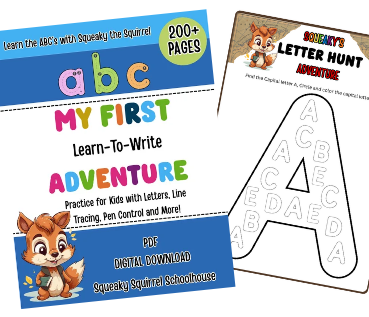
Make ABC Practice a Little Adventure!
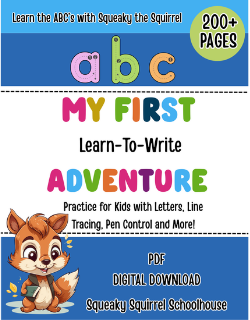
Looking for an easy way to get started? The My First ABC Tracing Adventure Pack from Squeaky Squirrel Schoolhouse is designed to help make alphabet practice feel like a fun activity instead of a chore.