My First ABC Tracing Adventure: A Fun Way to Help Preschoolers Learn Letters
Learning the alphabet is one of the first big adventures in a child’s early learning journey.
For preschoolers, learning letters isn’t just about memorizing A, B, C. Children are also beginning to recognize letter shapes, practice pencil control, develop fine-motor skills, learn letter sounds, and eventually connect letters with words.
But Here Is the Secret:

Alphabet practice doesn’t have to feel like school.
With the right activities, children can learn their ABCs through coloring, tracing, drawing, and playful exploration.
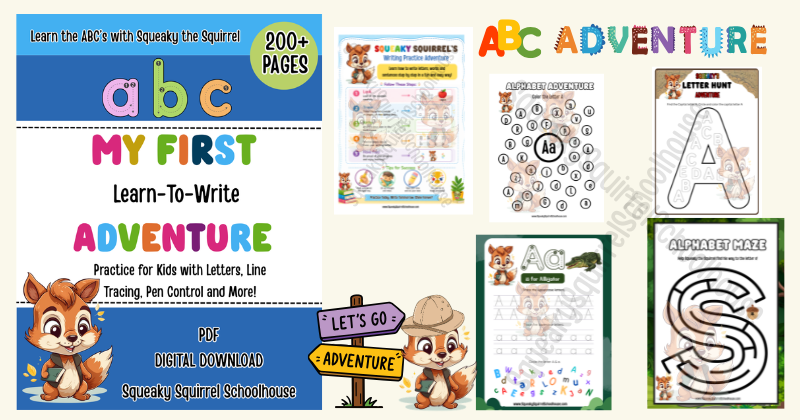
That’s the idea behind the My First ABC Tracing Adventure Pack from Squeaky Squirrel Schoolhouse—a fun, printable learning adventure designed to help young children practice their letters while keeping little hands and minds engaged.
Why Is Learning the Alphabet So Important?
The alphabet is the foundation for many early literacy skills.
Before children become confident readers and writers, they need opportunities to become familiar with letters.
Learning the alphabet can help children begin to:
- Recognize uppercase letters
- Recognize lowercase letters
- Understand that letters represent sounds
- Develop pencil control
- Practice writing
- Build fine-motor skills
- Recognize letters in their environment
- Begin connecting letters with words
- Develop early reading confidence
Every child develops at their own pace, so there’s no need to rush.
The goal is to provide plenty of fun opportunities to practice.
What Is the My First ABC Tracing Adventure Pack?
Squeaky’s My First ABC Tracing Adventure Pack is a digital printable resource created for young learners who are beginning their alphabet journey.
Instead of simply giving children a page filled with letters to trace, the goal is to make alphabet practice feel like an adventure.
Children can trace letters, practice writing, color, and explore alphabet-themed activities while building important early-learning skills.
And because it’s a digital download, parents can print the activities when they’re needed and use them again as part of a preschool learning routine.
Why Tracing Is Important for Preschoolers
Tracing may look simple, but it gives young children valuable practice.
When a child traces a letter, they’re learning to control a pencil or crayon while following a specific shape.
This can help develop:
Fine-motor control
Children practice controlling small hand and finger movements.
Hand-eye coordination
They learn to coordinate what they see with how they move their hands.
Letter recognition
Repeated exposure helps children become familiar with letter shapes.
Pre-writing skills
Tracing can help children practice the movements they’ll eventually use when writing independently.
Confidence
Successfully completing a letter can give children a feeling of accomplishment.
Turn ABC Practice Into an Adventure
One of the best ways to keep preschool learning interesting is to give it a story or theme.
Instead of:
“We’re going to practice letters.”
Try:
“Squeaky is going on an ABC adventure! Are you ready to come along?”
Suddenly, tracing letters becomes part of a journey.
You can introduce a different letter each day and create a simple adventure around it.
A — Apple Adventure
Find something red.
Trace A.
Draw an apple.
Say the word apple.
B — Bear Adventure
Trace B.
Color a bear.
Say bear.
Find another word that begins with B.
C — Cat Adventure
Trace C.
Color a cat.
Practice the /C/ sound.
Look for the letter C around the house.
The activity doesn’t need to be complicated.
A little imagination can make a big difference.
10 Fun Ways to Use an ABC Tracing Pack
The printable pages don’t have to be used only at a table.
Here are some ways to make alphabet practice more interactive.
1. Use Crayons Instead of Pencils
Some preschoolers aren’t ready for traditional pencil work. Let them trace letters using chunky crayons or colored pencils. The goal is practice—not perfection.
2. Add a Coloring Adventure
After tracing a letter, have your child color an object associated with that letter.
For example:
A = Apple
B = Bear
C = Cat
This gives children another opportunity to connect the letter with a word. View Squeaky’s ABC Jungle Safari Adventure to color and learn animals of the jungle.
After practicing a letter, look for that letter around the house.
Can your child find it on:
- Books?
- Food packages?
- Toys?
- Signs?
- Clothing?
- Labels?
This helps children understand that letters aren’t just found on worksheets.
They’re everywhere!
Practice With Play-Dough
Have your child make the letter using play-dough.
This provides another hands-on way to explore the shape of the letter.
You can say:
“Can you make a big A?”
Then trace the letter on the printable afterward.
5. Use Magnetic Letters
If you have magnetic letters, let your child find the letter they’re learning.
For example:
“Let’s go on a adventure with Squeaky and learn the letter B today! Can you find B?”
Then compare the magnetic letter with the traced letter.
6. Say the Letter Sound
As your child traces the letter, say its sound together.
For example:
M says /m/.
S says /s/.
Keep it simple and playful.
7. Find Words That Start With the Letter
Once your child knows the letter, think of words that begin with it.
For example:
D
Dog
Duck
Door
Dinosaur
You can even walk around the house looking for things that begin with the sound.
8. Practice in Short Sessions
Preschoolers don’t need to complete an entire packet in one sitting.
Try:
One letter per day.
That’s enough.
You can always return to letters your child finds difficult.
9. Let Your Child Decorate the Letters
Encourage creativity.
Your child could:
- Add stickers
- Draw dots
- Add stars
- Color the letters
- Draw pictures around them
- Use different colors
There isn’t only one “right” way to learn a letter.
10. Celebrate Every Letter
When your child finishes a page, celebrate the effort.
Say:
“You traced your A!”
“Look at how carefully you followed the lines!”
“You remembered the letter B!”
Small moments of encouragement can help build a positive attitude toward learning.
A Simple ABC Learning Routine for Busy Parents
You don’t need hours of structured preschool lessons.
Try a simple 15-minute ABC Adventure.
Step 1 — Introduce the Letter
Spend a few minutes looking at the day’s letter.
Say its name together.
Step 2 — Trace
Complete the tracing activity.
Don’t worry if the first attempts aren’t perfect.
Step 3 — Talk About the Letter
Think of words that begin with the letter.
Step 4 — Color
Color the picture or create a drawing.
Step 5 — Find the Letter
Look for the letter somewhere else. That’s it! A short activity like this can become part of a child’s regular learning routine.
How Parents Can Make Alphabet Practice More Fun
The biggest mistake parents sometimes make is focusing too much on getting the “perfect” answer.
Preschool learning should be about exploration.
If your child writes a wobbly letter, that’s okay.
If they color outside the lines, that’s okay.
If they want to trace the same letter three times, that’s okay too.
At this age, practice matters more than perfection.
Try saying:
“Let’s try it together.”
Instead of:
“That’s wrong.”
Try:
“Let’s look at the letter again.”
Instead of:
“You need to do this better.”
Try:
“You’re getting better every time you practice!”
The Connection Between Letter Recognition and Reading
Learning letters is an important part of building early literacy skills.
Children eventually need to recognize letters quickly so they can connect them with sounds and begin decoding words.
For example:
C → /k/ → cat
D → /d/ → dog
M → /m/ → moon
Alphabet activities can give children repeated opportunities to see, say, trace, and talk about letters.
As their skills develop, you can gradually introduce more phonics and early reading activities.
ABC Learning Doesn't Have to Happen at a Desk
Some of the best learning happens away from the worksheet.
Try taking your ABC Adventure outside.
Go on an Alphabet Nature Hunt
Look for:
A — acorn
B — bird
C — cloud
D — dirt
You can even take pictures of the things your child discovers.
Have an ABC Snack
Choose foods that begin with different letters.
A: apple
B: banana
C: carrot
Play an ABC Movement Game
Call out a letter and have your child move like something that begins with that letter.
D: Dance!
F: Fly like a bird!
J: Jump!
Learning becomes much more memorable when children can move, touch, see, and experience what they’re learning.
Why Printable Learning Activities Are So Helpful
Digital printable resources can be incredibly convenient for parents, grandparents, teachers, and homeschool families.
Once you have the Squeaky’s My First ABC Tracing Adventure Pack, you can print the pages when you need them and incorporate them into your existing routine.
You can use them for:
- Preschool at home
- Homeschool activities
- Morning learning
- Quiet time
- Daycare activities
- Classroom centers
- After-school practice
- Travel activities
- Summer learning
- Kindergarten preparation
They’re also easy to combine with other activities such as books, puzzles, coloring, games, and hands-on learning.
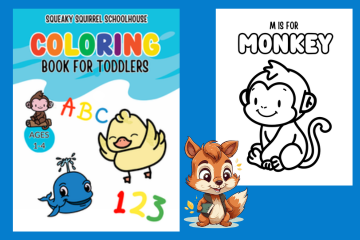
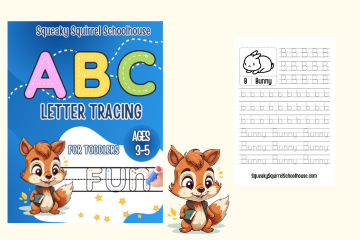
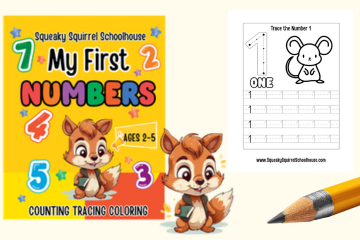
Make learning numbers simple, calm, and fun for your toddler.
This beginner-friendly workbook is specially designed for ages 3+
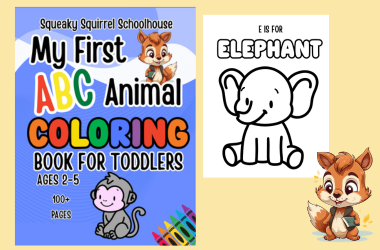
Perfect Gift for Toddlers – Coloring, Letter Tracing Learning Alphabet & Cute Animals!
A 26-Day ABC Adventure
Want to turn the pack into a month-long learning adventure?
Try this simple plan:
Day 1: A
Day 2: B
Day 3: C
Day 4: D
Day 5: E
Day 6: F
Day 7: G
Day 8: H
Day 9: I
Day 10: J
Day 11: K
Day 12: L
Day 13: M
Day 14: N
Day 15: O
Day 16: P
Day 17: Q
Day 18: R
Day 19: S
Day 20: T
Day 21: U
Day 22: V
Day 23: W
Day 24: X
Day 25: Y
Day 26: Z
At the end of the adventure, go back and review the letters your child finds most challenging. You can even celebrate with a special reading time together.
Who Is Squeaky's My First ABC Tracing Adventure Pack For?
This printable resource can be a great fit for families looking for fun ways to introduce alphabet practice to young children.
It may be especially useful for:
- Preschoolers
- Children beginning letter recognition
- Early learners practicing pre-writing skills
- Homeschool families
- Parents looking for screen-free activities
- Preschool teachers
- Daycare providers
- Grandparents and caregivers
- Children preparing for kindergarten
Every child learns differently, so use the activities at a pace that feels comfortable for your child.
Make Your Child's ABC Journey an Adventure
Learning the alphabet is about much more than memorizing 26 letters.
It’s the beginning of a child’s literacy journey.
It’s learning that A is more than a symbol.
It’s an apple.
B can become a bear.
C can become a cat.
Letters become sounds.
Sounds become words.
Words become stories.
And eventually, those stories open up an entire world of imagination and discovery.
That’s why we created Squeaky’s My First ABC Tracing Adventure Pack.
At Squeaky Squirrel Schoolhouse, we want to help parents turn everyday learning into something children look forward to.
So grab some crayons, find a cozy learning spot, and invite your little learner to join Squeaky on an ABC adventure.
Ready to Start Your ABC Adventure?
Give your little learner a fun way to practice letters, tracing, coloring, and early literacy skills with Squeaky’s My First ABC Tracing Adventure Pack from Squeaky Squirrel Schoolhouse.
Trace. Color. Explore. Learn.
Because learning the ABCs can be the beginning of a very big adventure!
Frequently Asked Questions
The pack is designed with young early learners in mind, particularly preschool-aged children who are beginning to recognize and practice letters. Parents can adjust the activities based on their child’s individual development and readiness.
Short, regular practice sessions can work well for young children. Even 5–15 minutes at a time can provide useful practice without overwhelming your child.
Many children begin by learning uppercase letters because their shapes can be easier to distinguish, but both uppercase and lowercase letters are important. Introduce them in a way that works naturally for your child.
Yes. Printable alphabet activities can easily be incorporated into a preschool homeschool routine alongside reading, phonics, numbers, crafts, games, and hands-on activities.
Try using different writing tools, adding coloring activities, turning letters into scavenger hunts, using play-dough or magnetic letters, and connecting each letter to objects your child already knows.
Don’t force the activity. Try a different approach. Let your child build the letter with blocks, make it with play-dough, find it around the house, or simply talk about the letter. You can return to tracing when your child is ready.
